Oral Hygiene: How to Brush and Floss the Right Way
Healthy teeth start at home. Good brushing and flossing every day is the best way to prevent cavities and gum disease, and it only takes a few minutes. At Salem Dentistry in Long Beach, Dr. Roxana Salem, DDS, and our team show every patient, children and adults alike, how to care for their teeth between visits.
Questions about your home care? Call 562-435-8339 or book online
Why daily care matters
Cavities and gum disease are both caused by plaque, a sticky, colorless film of bacteria that forms on your teeth all day long. If plaque isn’t removed, it hardens into tartar and irritates your gums. Gum disease is a leading cause of tooth loss in adults, and nearly half of adults over 30 have some form of it. Daily brushing and flossing removes plaque before it can do damage.
How to brush
Brush twice a day for two minutes with a soft toothbrush and fluoride toothpaste.
- Angle the brush. Hold it at a 45-degree angle where your teeth and gums meet.
- Use small, gentle circles. Clean the outside surfaces of all your teeth with light pressure. Scrubbing hard can wear down your gums.
- Clean the inside surfaces. Use the same motion on the inside of your back teeth.
- Turn the brush upright for front teeth. Hold it vertically and make gentle up-and-down strokes on the inside of your upper and lower front teeth.
- Brush the chewing surfaces. Use short, gentle strokes.
- Brush your tongue. This removes bacteria and freshens your breath.
- Spit, but don’t rinse right away. Leaving a little toothpaste on your teeth lets the fluoride keep working.
How to floss
Gum disease usually starts between the teeth, where your toothbrush can’t reach. Floss once a day.
- Start with about 18 inches of floss. Wrap most of it around the middle finger of one hand and the rest around the middle finger of the other.
- Guide it gently. Hold the floss tightly between your thumbs and forefingers and ease it between your teeth with a back-and-forth motion. Don’t snap it into place.
- Curve it into a C shape. Wrap the floss against one tooth and slide it gently under the gumline until you feel light resistance.
- Move it up and down. Clean the side of that tooth, then do the same on the neighboring tooth. Each space has two tooth surfaces to clean.
- Use a fresh section as you go. Unwind clean floss from one finger as you move from tooth to tooth.
- Don’t forget the back. Clean behind the last tooth on each side, top and bottom.
Your gums may bleed or feel a little sore during the first week of flossing. This is normal and should stop as your gums get healthier. If it hurts, you may be pressing too hard.
Brushing tips for children
- Start cleaning your baby’s teeth as soon as the first tooth appears
- Under age 3, use a smear of fluoride toothpaste the size of a grain of rice
- From ages 3 to 6, use a pea-sized amount
- Help your child brush until about age 7 or 8, when they can do a thorough job alone
- Start flossing when two teeth touch
- Fluoride mouth rinses are not recommended for children under 6
Caring for sensitive teeth
Teeth are sometimes sensitive to hot and cold after dental treatment. This usually passes quickly when you keep your mouth clean. If sensitivity lasts or gets worse, call us. Dr. Salem may recommend a toothpaste or rinse made for sensitive teeth, or check for another cause.
Choosing oral hygiene products
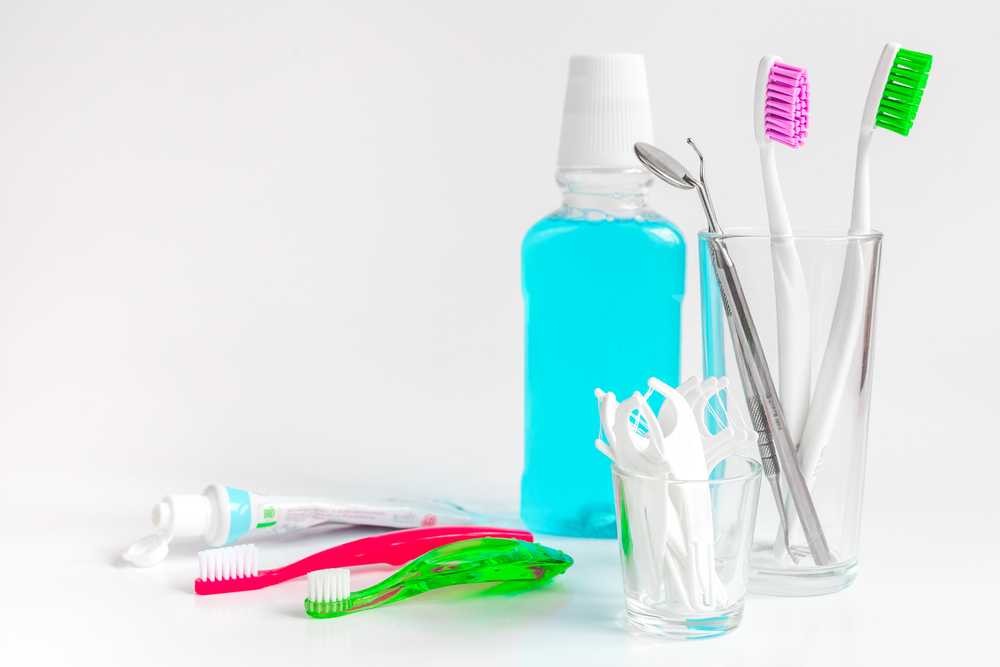
- Toothbrush: Choose soft bristles, and replace your brush every three months or when the bristles fray.
- Electric toothbrushes are safe and effective, and many people find they clean better with one.
- Fluoride toothpaste strengthens enamel and helps prevent cavities.
- Water flossers are a helpful addition, especially with braces, bridges, or implants, but they don’t fully replace floss.
- Small between-teeth brushes work well for wider gaps. Ask us to show you how to use them so you don’t injure your gums.
- Tartar-control toothpaste reduces tartar above the gumline, but it doesn’t treat gum disease, which starts below the gumline.
Why you still need professional cleanings
Even with excellent brushing and flossing, some plaque hardens into tartar that only professional tools can remove. Regular exams and cleanings at our office remove that buildup and catch small problems early, before they become painful or expensive.
Questions patients ask
How often should I brush and floss?
Brush twice a day for two minutes and floss once a day.
Should I floss before or after brushing?
Either works. The important thing is to do it every day. Many people prefer flossing first, so the fluoride from their toothpaste can reach between the teeth.
Is an electric toothbrush better than a manual one?
Both work well when used properly. An electric brush can make it easier to clean thoroughly, especially for children and for anyone with limited hand movement.
Why do my gums bleed when I brush or floss?
Bleeding is usually a sign of irritated gums from plaque buildup. Keep brushing and flossing gently every day. If the bleeding lasts more than a week or two, come in for a check.
How often should I see the dentist?
Most people should have an exam and cleaning every six months.
Do you take my insurance?
We accept all PPO dental plans and Medi-Cal Dental. We do not accept HMO plans. Call us and we’ll check your benefits for you.
Keep your smile healthy for life
Good habits at home and regular visits go hand in hand. Call Salem Dentistry at 562-435-8339 or book online to schedule your next exam and cleaning.