Sleep Apnea and Snoring Treatment in Long Beach, CA: A Comfortable Alternative to CPAP
Do you snore, wake up tired, or feel worn out during the day no matter how long you sleep? You may have sleep apnea. At Salem Dentistry in Long Beach, Dr. Roxana Salem, DDS, makes custom oral appliances, a comfortable and quiet alternative to a CPAP machine. You don’t need a diagnosis to come in. Dr. Salem works closely with sleep physicians, so you get the right test first and the right treatment after.
Call 562-435-8339 or book online
Why patients choose Salem Dentistry for sleep apnea
- Advanced training. Dr. Salem completed the Sleep Medicine Mini-Residency at the UCLA School of Dentistry.
- No diagnosis needed to start. If you haven’t been tested, Dr. Salem refers you to a sleep physician for a sleep study.
- Clear, upfront pricing. You’ll know the full cost of your appliance before we begin.
- One dentist from start to finish. You see Dr. Salem at every visit, and your appliance is fitted and adjusted in our office.
- Help for snoring too, even if you don’t have sleep apnea.
- Care in three languages: English, German, and Farsi.
Common signs of sleep apnea
- Loud snoring
- Waking up gasping or choking
- A partner noticing that you stop breathing during sleep
- Dry mouth or sore throat in the morning
- Morning headaches
- Restless sleep or trouble staying asleep
- Feeling tired or sleepy during the day
What is sleep apnea?
Sleep apnea is a sleep disorder in which your breathing stops and starts many times during the night. Each pause wakes your body up a little, even if you don’t remember it. Over time, poor sleep can make it hard to focus, work, or drive safely.
Left untreated, sleep apnea is linked to serious health problems, including:
- High blood pressure
- Heart disease and stroke
- Type 2 diabetes
- Depression
Types of sleep apnea
- Obstructive sleep apnea is the most common type. Soft tissue in the throat relaxes and blocks your airway while you sleep.
- Central sleep apnea is less common. The brain doesn’t send the right signals to the muscles that control breathing.
Oral appliances treat obstructive sleep apnea. If you have central sleep apnea, Dr. Salem will help you get to the right physician.
How treatment works
- Visit Dr. Salem. She listens to your symptoms, examines your mouth, jaw, and airway, and answers your questions.
- Get a diagnosis. Sleep apnea is diagnosed by a physician, usually with a sleep study. If you haven’t had one, Dr. Salem refers you to a sleep physician. If you already have a diagnosis, bring your results.
- Have your appliance made. Dr. Salem takes impressions of your teeth, and your appliance is custom-made to fit your mouth.
- Fitting and adjustments. Dr. Salem fits the appliance and fine-tunes it over follow-up visits until it’s comfortable and working well.
- Ongoing care. She checks your appliance, teeth, and jaw at regular visits and keeps your sleep physician informed.
What is an oral appliance?
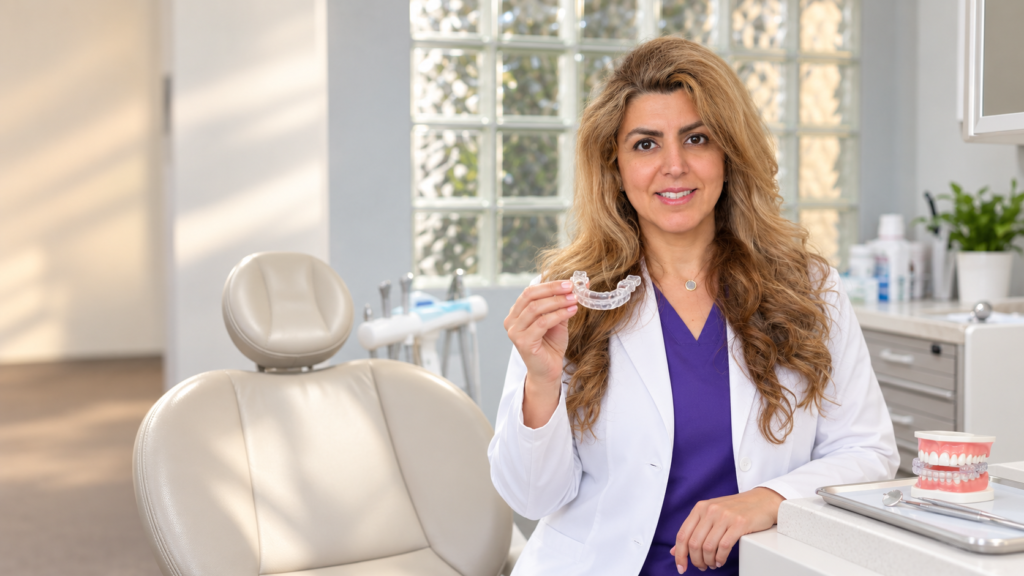
It looks like a sports mouth guard and gently holds your lower jaw forward while you sleep, keeping your airway open. Oral appliances are a recognized treatment for mild to moderate obstructive sleep apnea, and for people with severe sleep apnea who can’t tolerate CPAP.
Patients like oral appliances because they are:
- Comfortable and custom-made for your mouth
- Quiet, with no mask, hose, or machine
- Small and easy to travel with
- A good option if you can’t tolerate CPAP
Healthy habits that also help
- Losing weight, if needed
- Quitting smoking
- Sleeping on your side instead of your back
- Avoiding alcohol and sleeping pills before bed
Questions patients ask
Do I need a sleep study before I see you?
No. Come in first, and if your symptoms point to sleep apnea, Dr. Salem will refer you to a sleep physician for testing. If you’ve already been diagnosed, bring your sleep study results to your first visit.
Can an oral appliance replace my CPAP?
For many people with mild to moderate obstructive sleep apnea, yes. It’s also an option if you have severe sleep apnea and can’t tolerate CPAP. Dr. Salem and your sleep physician will decide together what’s right for you.
I only snore. Can you help?
Yes. Loud snoring can be a sign of sleep apnea, so the first step is making sure that isn’t the cause. If it’s snoring alone, a custom appliance can often quiet it.
Is the appliance comfortable?
Most people get used to it within a couple of weeks. Some notice mild jaw or tooth soreness or extra saliva at first, which usually passes. Dr. Salem adjusts the appliance so it fits well and checks your bite at follow-up visits.
How much does an oral appliance cost, and do you bill insurance?
The appliance is self-pay, and we do not bill insurance for it. We give you the full cost upfront, before any treatment starts, so there are no surprises. You may be able to use HSA or FSA funds. Call us at 562-435-8339 for current pricing.
How do I know the appliance is working?
You should notice better sleep and less snoring. Your sleep physician may also order a follow-up sleep test with the appliance in place to confirm it.
Sleep better, starting now
Call Salem Dentistry at 562-435-8339 or book online today. A better night’s sleep may be closer than you think.